

Rethinking workforce training and spending, with Guild’s Zoe Weintraub Barrett.
What tools and thinking do we need to navigate this unique moment for jobs?


Something I spend a lot of time thinking about is where to find the “easy buttons” for workforce. The easier it is for an employer or a worker to do something, the more likely they are to do it.
What’s tricky about this moment, though, is things are aggressively changing as employers try to sort how to integrate AI into their work and respond to incentives to cut job types that investors think can readily replace humans. You can build an easy button, but it could disconnect a few minutes later.
A company working on these challenges is Guild. You probably best know Guild from their work with corporate employers to help provide education benefits to their workers. But Guild’s work has broadened of late to include the public sector. It has debuted products such as Guild Navigator, aimed at helping guide workers into licensed and certified roles such as in healthcare. Guild is also involved in the ongoing shifts in how the federal government invests in workforce. It supplied infrastructure for a training program under a Biden good jobs grant in Alabama and it’s working with Oklahoma to administer its slice of new Trump Department of Labor pay-to-train incentives for employers.
To get a sense of what Guild is seeing out of this work, I talked last week with Zoe Weintraub Barrett, Guild’s head of public sector partnerships. Below, Zoe and I chat about sharing with states what Guild learned in a decade of work with big employers, changing expectations from public funders, and leveling with employers on workforce reimbursement programs like the new DOL grants.
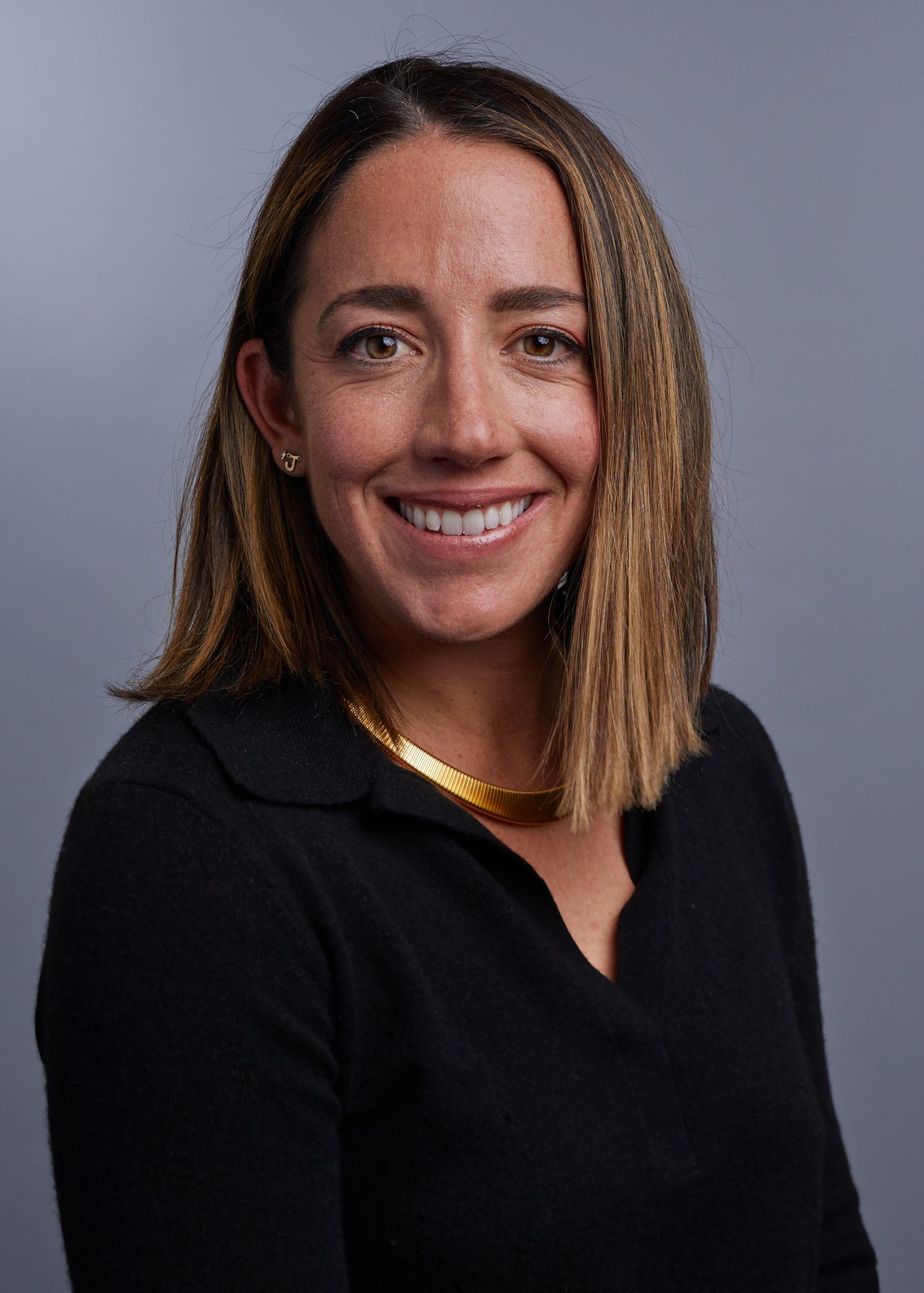
This interview has been edited for length and clarity.
Nick Beadle: A lot of my readers probably know Guild from the education benefits you provide companies like Walmart and Target. Can you talk about where Guild is today in terms of its evolution and what it’s trying to do in the workforce space right now?
Zoe Weintraub Barrett: Over the last 10 years, Guild has helped employers across industries think about building real-world solutions to solve their talent challenges—think Target, JP Morgan Chase, Chipotle, Providence Health. [We have been] really thinking about how do they support incumbent workers to have the right infrastructure, whether that’s coaching or financial support or visibility into what is the pathway that could get a worker on this journey and directly deliver that through employers.
Now we’re working with cities and states and really thinking, “OK, [after] the last decade, how do we leverage both the infrastructure and the insight of the private sector into the public sector world?” I’ll say that in one view—and myself and our CEO were talking to a governor recently—we’ve been solving talent transformation problems within the four walls of multi-state employers for the last decade. Those talent transformation problems aren’t entirely different from state talent transformation problems. When you think about it, you know, the governor is the CEO of that state and they’re thinking about growing business, which also means attracting new business and growing their overall revenue contribution, and they have to think about their talent in the state differently.
[What we bring is how] we think about education and learning and how do you measure the outcomes, whether that’s skill attainment or job mobility or time to completion, things that have all been brought from Guild’s infrastructure of working with employers and learning institutions [and] then measuring how those dollars are spent. I share the “measuring how dollars are spent” [part] because I also think we’re at a unique point in time right now where there is more emphasis on performance-based investments, [including] the way in which funds are used and what are [the funds] driving to from a completion or a job placement perspective.
Nick: Coming into the public sector, I guess your pitch would be, “You don't have to build this stuff. We already have it built. We've been building it,” right?
Zoe: We've done, I think, over 70,000 transitions of workers into in-demand and resilient jobs. [The questions of] “How do you get someone into the right learning program?”, “How do you make sure they complete it?”, [and] “How do you make sure that the employer on the other end of that is willing to hire from it?” The mechanisms to doing that, we've really scaled in a way that I think workforce development has had challenges in the past because [it’s been] regionalized.
Nick: I hear a lot of frustration that every employer thinks their job is precious. It sounds like you guys have enough data to where you can find some commonalities.
Zoe: Every employer in our experience used to think, “Oh, well, my jobs are special and I'm going to need to work with a local institution.” Or each regional hospital system is going to have a different way [of hiring and training]. When, actually, we can come up with a common framework or a standard set of skills. Then there's flexibility in the providers or the training providers as long as they're meeting those kind of competencies.
We partnered with the City of Birmingham on their Good Jobs Challenge grant. Their last round of that, there is a healthcare-specific pathway that is using our Guild Navigator product. [Guild Navigator] was really designed to work on a licensure role so that there was a clear codified pathway from doing online or in-person training at a training provider. [So that workers could ask,] “What are the milestones I need to do to be able to start to do my clinicals?”, and then the product actually allows for [task-level guidance] that the individual completes [as part of the training.]
We’ve actually been able to integrate all of that into the platform and do that at a pathway level. So, it’s not necessarily that the certified clinical medical assistant in Birmingham is going to look like a different pathway than [one used by] someone in Oklahoma City. It should more or less be the same. The different inputs are going to be the employer that’s engaging in the clinical work, or the employer that’s already hiring or planning to hire someone.
Nick: You’re involved in Oklahoma’s pay-per-performance fund from DOL, which was one of their first projects paying employers to train or upskill workers. Can you talk a little bit about what you guys are doing in that project and how it touches on these issues? It’s definitely a trend on DOL’s part in how they are spending workforce money right now.
Zoe: Our role [is] to manage the employer engagement and the administration of the incumbent worker training fund.
[Oklahoma] focused on aerospace and defense, advanced manufacturing, and AI data infrastructure, and they may include healthcare as well. I think that’s a potential late add. The goal was, “How do we further incentivize employers in this space to continue their investment?” We partnered with [Oklahoma] because [Oklahoma] wants to know how to work with employers—large, medium, small—and have the infrastructure to do reimbursement. Guild’s core education benefits product is a reimbursement or payments-processing tool between learning institution, individual, and employer.
We will reimburse [employers] for their investments and Guild’s the operating layer to do that. What’s nice, I think, is we’re actually going to create some flexibility here for companies within the state.
Oklahoma will be able to drive folks to some of the technical career programs that are available, like the [career and technical education] programs, then other companies that may want to have an infrastructure to facilitate that [can tap into it]. That gives a lot of optionality to industry, which is quite different than most incumbent worker training funds that exist today. It’s basically, you know, you submit information online [and describe], “This is why I need this training.” You get reimbursed a percentage of those investments based on the size of your business.
What we’re excited about is [Guild’s infrastructure] actually creates more modalities that companies can engage and reduce that administrative burden and have alignment on what are good programs that can drive the outcomes. Both the state and the federal government are looking for that.
Nick: I have heard heartburn over the reimbursement model, based on folks who worked with state programs who had a hard time getting the money out of the state when it’s time to reimburse at the end of the program. It sounds like you guys have an existing pathway for doing reimbursement more effectively.
Related to that, we had some recent Senate testimony from the manufacturers that I thought was interesting. As I understood it, they were talking about how upfront costs of building a training program are really where things can break down on these workforce programs for manufacturers. So how do you kind of convince those folks that, “Hey, this is worth your while to invest in your workers and it’s worth waiting out the money”?
Zoe: I’d say two things based on our experience. One, manufacturing is complicated because a lot of times folks have to be trained before they’re hired. So companies sometimes are incentivized with economic development incentives or dollars that are like, “Hey, come build this facility. We’ll give you dollars towards training.” But that’s a lot of upfront work to what isn’t core to the business, right? And [the workers are] not even their employees. I think that’s sometimes one of the biggest challenges in that sector.
I think the way in which we’re thinking about going about it—and frankly our experience with employers to date—is that if they do this, they’re going to get the money. [But] it’s a necessary part of getting the money [that] you have to put up dollars.
Hopefully what’s nice about the model that we’re engaged in with Oklahoma is that we’re vetting programs. If you’re literally like, “I want the money. I need workers. I’m in this industry, but I have no idea what training provider to go to actually get quality talent.” You’ll actually be able to rely on both us and the state that these [training providers] are pre-vetted.
Nick: I wrote last week about how this particular moment in workforce seems like it’s hard to build for. Emerging occupations have to emerge, and they may not emerge in time to actually set a training program up before they go away. How is Guild thinking about building for this moment in workforce?
Zoe: On our learning partner side, or the learning institutions we work with, there’s been a lot of dialogue and not a lot of solutions yet on how we move at the rate that things are changing. Whether that’s making this degree AI native or thinking about how do we put this into our curriculum. By the time we do that, because of the current academic system, that model will be out of date, right?
I think there’s a lot of great conversation and dialogue happening and more thinking about, “How do I unbundle parts of the degree even more so than we have before?” What parts of that can I essentially manage in the cloud? Not to use that like a cliche term, but, “What way can I make a change and it goes everywhere versus needing to rethink my curriculum?”
The tools are regularly changing, so we want a central infrastructure product that can quickly redeploy the ways in which those behaviors are changing to match the products.
Nick: To put a nice little phrase on it, it sounds like the goal is real-time adjustment so the training is not static. It changes as people are in process if a change happens. If you’re doing incumbent worker training and Anthropic drops this new thing that changes your field, you’re just adjusting the training and they get the training while they’re in the program.
Zoe: Right. Our healthcare practice has said that’s been one of their biggest challenges. There’s a whole other layer of complexity to using AI in healthcare. Many hospitals are not only equipping people with [AI] tools, they’re hiring them at such fast rates for some of these critical roles. They need to onboard them into their AI tools [that evolve during their work there] and they need to be flexible.
Nick: Wrapping up, where do you see workforce ending up in the near future? What’s going to be needed both from a market perspective and a how-do-we-need-to-be-doing-this-work perspective?
Zoe Weintraub: I see the macro changes that are happening right now that are basically impacting states to consolidate agencies across workforce and education. And what that consolidation is going to require is, I think, more of a marketplace approach.
I think the piece that will be key, that I have less of a crystal ball on, is what does that integration with K-12 look like. I think a state does need to have a 5-, 10-, 15-year understanding of what are the jobs that they’re trying to acquire [connected to] new business to grow in their state. That’s where they should continue to push young people and young adult workers and the current workforce, too. I think that pull through to K-12 will be really meaningful for outcomes there and connecting work-based learning earlier in the classroom.
Nick: Yeah. So, one foot in the now and one foot in the future because the now is awfully loud, but also you got to think where we’re going to be in like 15 years.
Zoe : Well, I think that has to be true when we think about the role of AI, right? I mean, there’s going to be such a consolidation of jobs. The state can’t afford for a bunch of people to be unemployed for long periods of time. They’re going to need to think about what are the incentives for industry or individuals to continue to upskill and reskill when they’re in jobs that maybe have an unclear career pathway, but are jobs today. I think that transparency can create a better incentive model between industry and states so that the investments in skilling happen before transition points that would ultimately both cost the individual and the state a lot of money.
Card subject to change.
Thanks to Zoe for a pretty deep conversation on a lot of what is happening in workforce right now.
Speaking of which, I’ll be back on Thursday for THE MONEY, where I’ll pick up some stuff that went by the wayside last week in the midst of the news, including shifts in how DOL approaches performance and universities looking to tap into Workforce Pell.
So yeah, Congress might drop a workforce bill and the New York Post dropped a story over the weekend with allegations that the Secretary of Labor took staff to a Portland strip club while on official business. Decent chance I might be back in your inbox a third time this week.
